

Tech needs hospitality skills
You don't need a computer science degree to work in tech. Companies are finally looking for people with strong interpersonal skills built in fast-paced environments. I've seen how much these transferable skills matter in hiring decisions today.
Think about it: serving isn’t just about taking orders and delivering food. It’s about anticipating needs, resolving conflicts, and maintaining composure under pressure. These are skills every tech company needs, regardless of the specific role. The rise of remote work has also shifted the focus; tech companies are less concerned with specific technical backgrounds and more interested in people who can communicate effectively and work collaboratively.
The need for people-focused roles within tech is increasing. While coding and engineering are important, those roles often require support from individuals who excel at communication, empathy, and problem-solving. Roles in sales, customer support, project management, and even UX research are actively seeking individuals with a background in providing excellent customer service. This is a genuine opportunity for hospitality professionals to leverage their experience.
The idea that you need to completely reinvent yourself to enter tech is a myth. You already possess a valuable skillset. It's about recognizing those skills and presenting them in a way that resonates with tech recruiters. Don’t underestimate the power of your experience – it’s more relevant than you might think.
How serving skills translate to tech
Let’s get specific. Many daily tasks as a server directly translate to valuable skills in the tech world. It's not about what you did, but how you did it. For example, handling customer complaints isn’t just about diffusing a situation; it’s about active listening, empathy, and conflict resolution. These are crucial skills for project managers navigating team disagreements or customer success managers addressing user concerns.
Memorizing complex orders and dietary restrictions? That’s attention to detail, a vital skill for QA testing, data entry, or even technical writing. A busy shift requires constant multi-tasking and prioritization – skills essential for almost any tech role. Upselling a dessert isn't just salesmanship; it's persuasive communication, valuable in sales and marketing positions. Teamwork in a hot kitchen builds collaboration skills.
I’ve spoken with several tech recruiters who consistently emphasize the importance of soft skills. Sarah Chen, a hiring manager at a software company in Toronto, told me, 'We often prioritize candidates who demonstrate strong communication, problem-solving, and adaptability. Technical skills can be taught, but those soft skills are harder to find.' That’s a powerful statement.
It’s about framing your experience correctly. Don't just list 'served customers.' Instead, describe how you 'resolved customer issues efficiently and maintained a positive customer experience under pressure.' The language you use matters. Think about the challenges you faced and the solutions you implemented. Those are the stories tech companies want to hear.
- Handling complaints involves conflict resolution and empathy.
- Memorizing Orders: Attention to detail, accuracy, information retention.
- Multi-tasking: Prioritization, time management, adaptability.
- Upselling: Persuasive communication, salesmanship, relationship building.
- Teamwork: Collaboration, communication, support.
Translating Server Skills to Tech Roles
| Server Skill | Tech Equivalent | Example Application | Potential Tech Roles |
|---|---|---|---|
| Handling Customer Complaints | Conflict Resolution/Customer Support | De-escalating tense situations with frustrated customers translates to resolving user issues. | Help Desk, Technical Support, Customer Success |
| Memorizing Menu Items & Specials | Data Retention/Information Architecture | Quickly learning and recalling a large amount of information is valuable in tech. | Data Analyst, Technical Writer, UX Researcher |
| Managing Multiple Tables Simultaneously | Task Switching/Project Management | Prioritizing and efficiently handling multiple demands at once. | Project Coordinator, Scrum Master, Operations |
| Working Effectively Under Pressure | Stress Management/Agile Adaptability | Maintaining composure and efficiency during peak hours. | Software Developer, DevOps Engineer, IT Manager |
| Teamwork & Collaboration | Collaborative Coding/Team Projects | Coordinating with kitchen staff, bartenders, and other servers. | Software Engineering, Data Science, Product Management |
| Cash Handling/POS Systems | Data Entry/Basic Accounting | Accurately processing transactions and balancing a till. | Data Analyst, Financial Analyst, Operations Analyst |
| Upselling & Suggestive Selling | Communication/Sales & Marketing | Persuading customers to add items to their order. | Sales Engineer, Marketing Specialist, Business Development |
| Maintaining a Clean & Organized Workspace | Attention to Detail/Quality Assurance | Ensuring tables are presentable and the service area is tidy. | Software Tester, Quality Assurance Engineer, Data Quality Analyst |
| Time Management & Efficiency | Workflow Optimization/Process Improvement | Serving tables quickly and efficiently during busy periods. | Operations Management, Business Analyst, Process Engineer |
| Problem Solving (e.g., incorrect orders) | Troubleshooting/Technical Problem Solving | Quickly resolving issues with orders or customer requests. | IT Support, Systems Administrator, Network Engineer |
Illustrative comparison based on the article research brief. Verify current pricing, limits, and product details in the official docs before relying on it.
Entry points for hospitality workers
Let's be realistic. Jumping straight into a software engineering role isn’t typical for someone transitioning from hospitality. However, there are many accessible entry points where your skills will be highly valued. Technical Support is a great starting point – your customer service experience is directly applicable. You'll be helping users troubleshoot issues, which requires patience, empathy, and problem-solving skills.
Sales Development Representatives (SDRs) are in high demand. This role focuses on outbound prospecting and qualifying leads. Your ability to build rapport with customers and handle objections will be a significant asset. Customer Success Managers focus on building relationships with existing customers and ensuring they get the most out of a product or service – a natural fit for someone who excels at providing excellent service.
Project Coordinators assist project managers with administrative tasks and communication. Your organizational skills and ability to manage multiple priorities will be valuable. UX Research, surprisingly, is another excellent option. Your ability to empathize with customers and understand their needs is critical for gathering user feedback and improving product design. Data Entry and Operations roles often require attention to detail and accuracy, skills you’ve honed in a fast-paced restaurant environment.
According to Indeed.com's 2026 salary estimates, Technical Support roles average around $50,000 - $65,000 annually. SDR positions typically range from $60,000 - $80,000, with potential for commission. Customer Success Managers can earn $70,000 - $95,000, and Project Coordinators generally fall within the $55,000 - $75,000 range. These are just averages, of course, and will vary based on location and experience.
- Technical support roles pay between $50,000 and $65,000.
- Sales Development Representative (SDR)
- Customer Success Manager
- Project Coordinator
- UX Research
- Data Entry/Operations
Tech Roles for Servers
- Sales Development Representative (SDR) - Qualifies leads and books meetings for Account Executives. Requires strong communication and interpersonal skills, resilience, and a goal-oriented mindset.
- Technical Support Specialist - Provides assistance to customers experiencing technical issues. Leverages problem-solving skills, patience, and clear communication. Often involves remote support tools and ticketing systems like Zendesk.
- Project Coordinator - Supports project managers with administrative tasks, scheduling, and communication. Benefits from organizational skills, attention to detail, and the ability to multitask – all honed in a fast-paced restaurant environment.
- UX/UI Researcher - Conducts user research to understand user behaviors and needs, informing design decisions. Strong observational skills and the ability to empathize with others (critical in customer service) are valuable.
- Data Entry Specialist - Accurately inputs and maintains data in various systems. Requires precision, speed, and attention to detail. Familiarity with spreadsheet software like Microsoft Excel is often needed.
- Customer Success Manager - Builds relationships with customers and ensures they achieve their desired outcomes using a product or service. Relies on communication, problem-solving, and a proactive approach.
- Recruiting Coordinator - Supports the recruitment process by scheduling interviews, managing candidate communication, and assisting with onboarding. Organizational skills and attention to detail are key.
Rewriting your resume
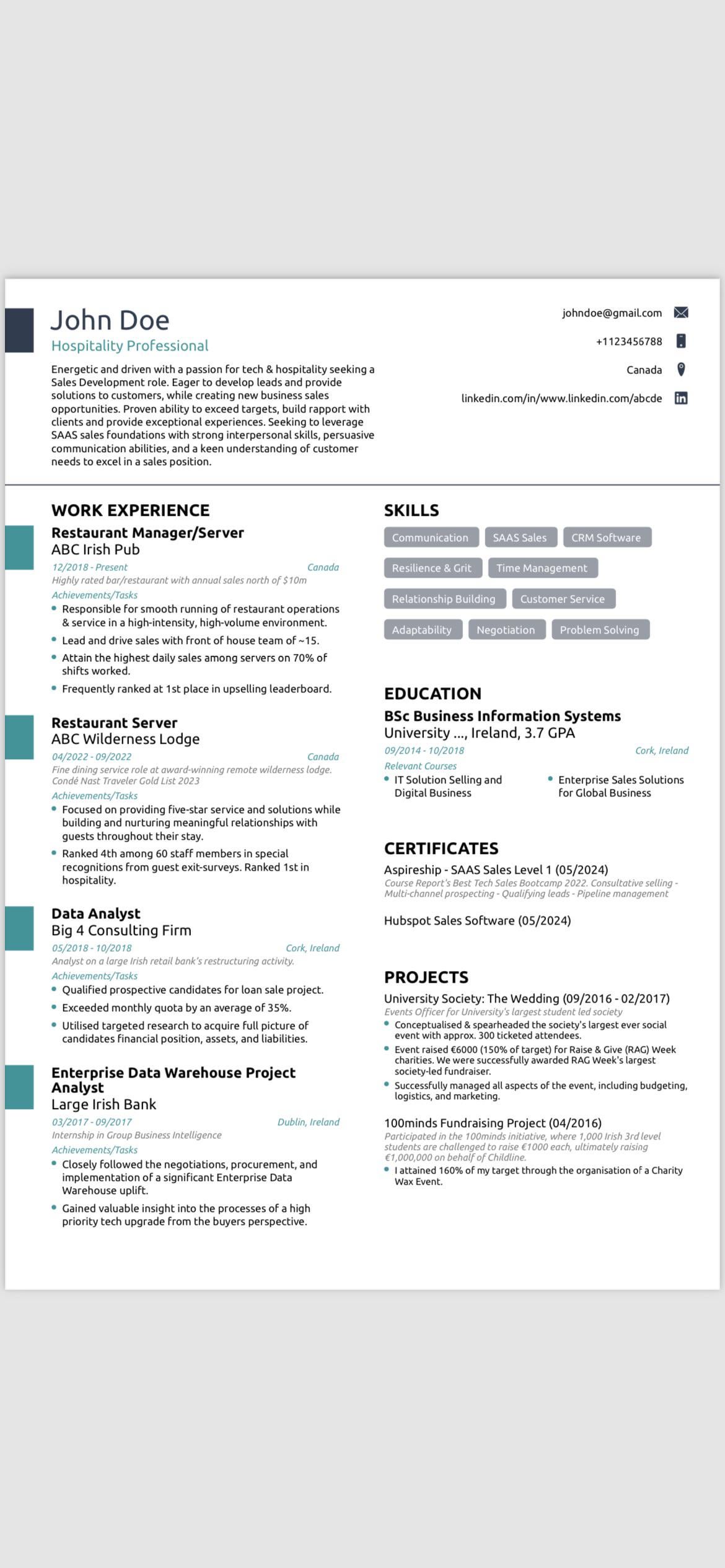
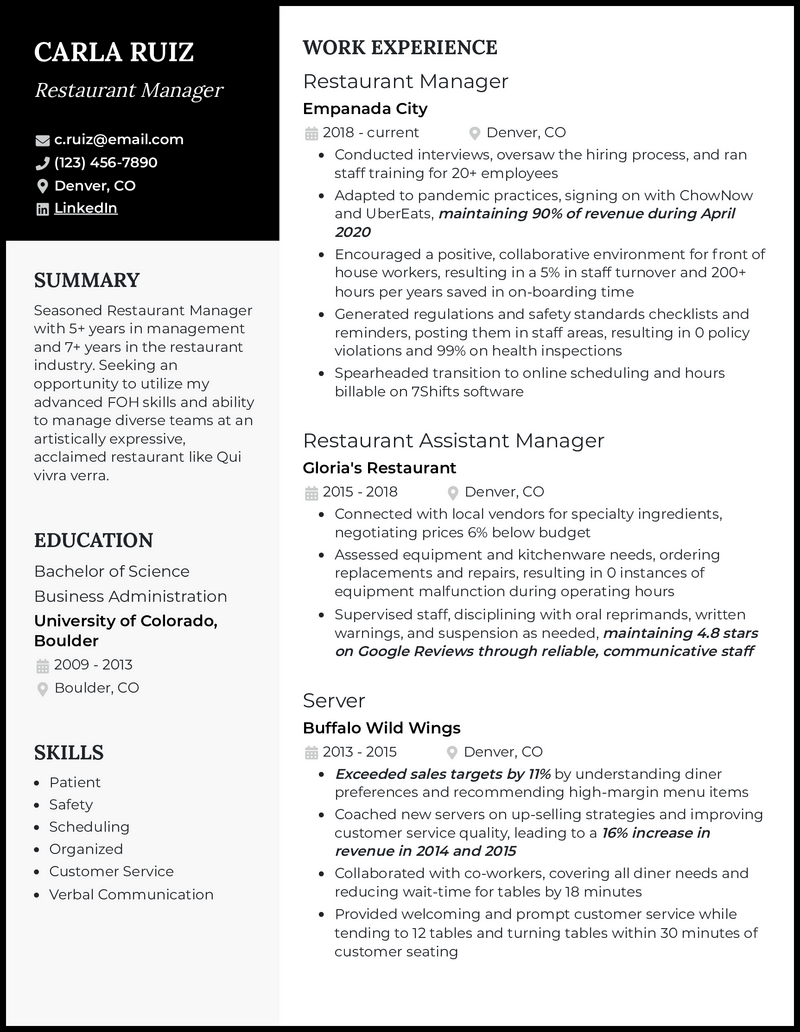
This is where the real work begins. Your server resume likely focuses on tasks specific to the restaurant industry. You need to restructure it to emphasize transferable skills and appeal to a tech audience. First, remove irrelevant details. No one cares about the specific menu items you served or the number of tables you managed. Focus on the skills you used while performing those tasks.
Rephrase your experience to highlight those transferable skills. Instead of 'Took customer orders,' try 'Managed multiple customer requests simultaneously, ensuring accuracy and satisfaction.' Instead of 'Handled cash transactions,' write 'Managed financial transactions with accuracy and accountability.' Use tech-specific keywords – research job descriptions for your target roles and identify frequently used terms. Incorporate those keywords naturally into your resume.
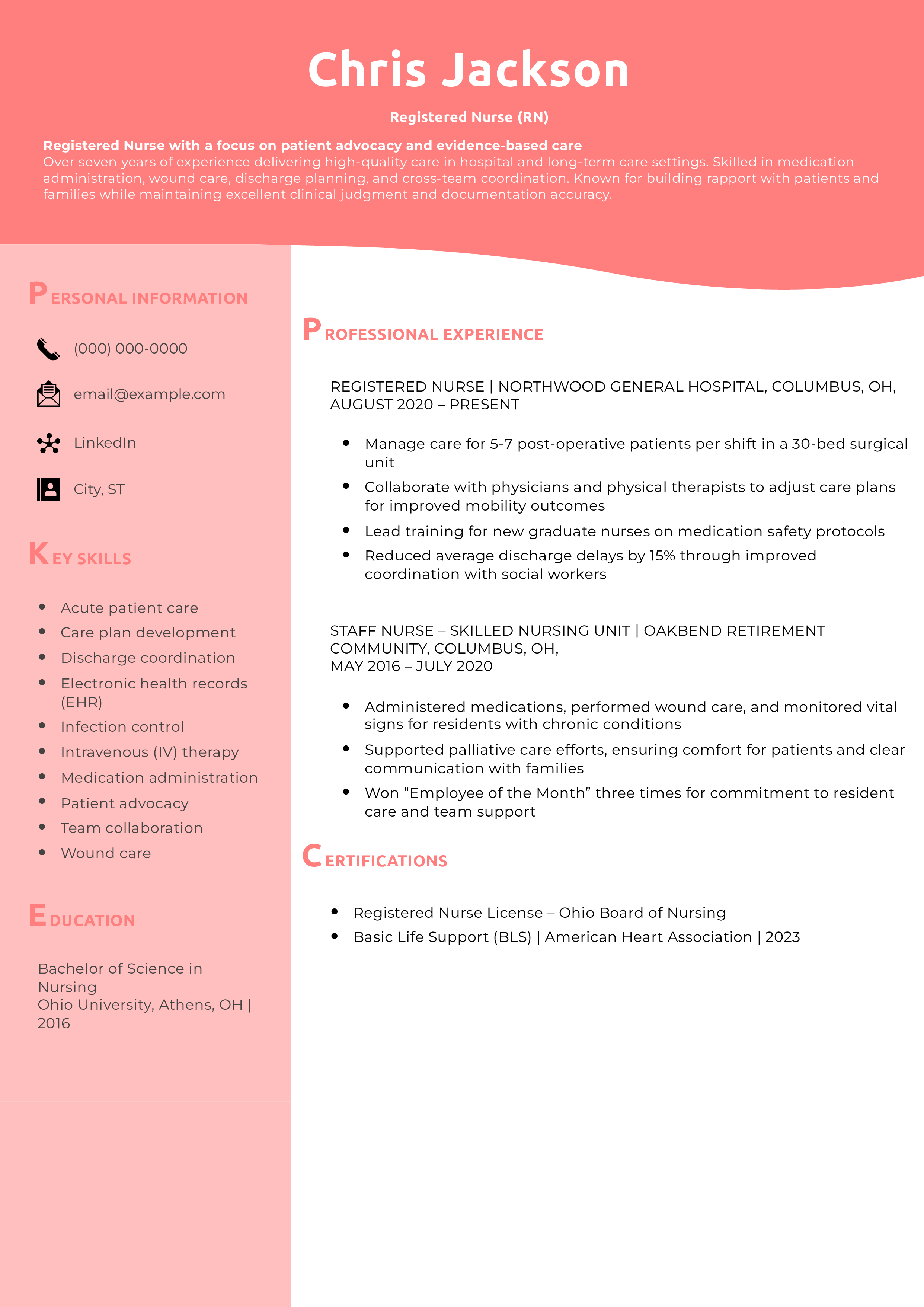
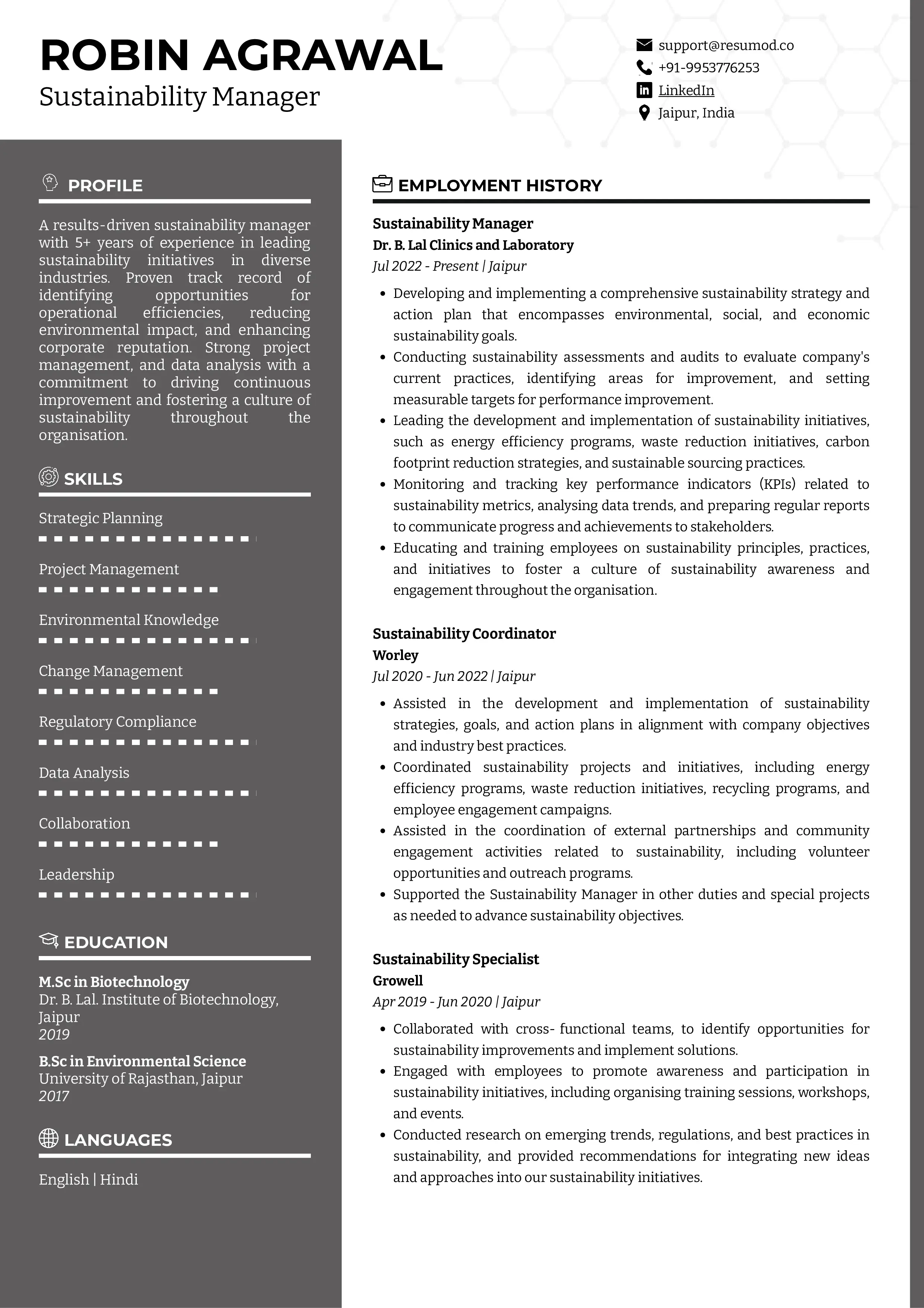
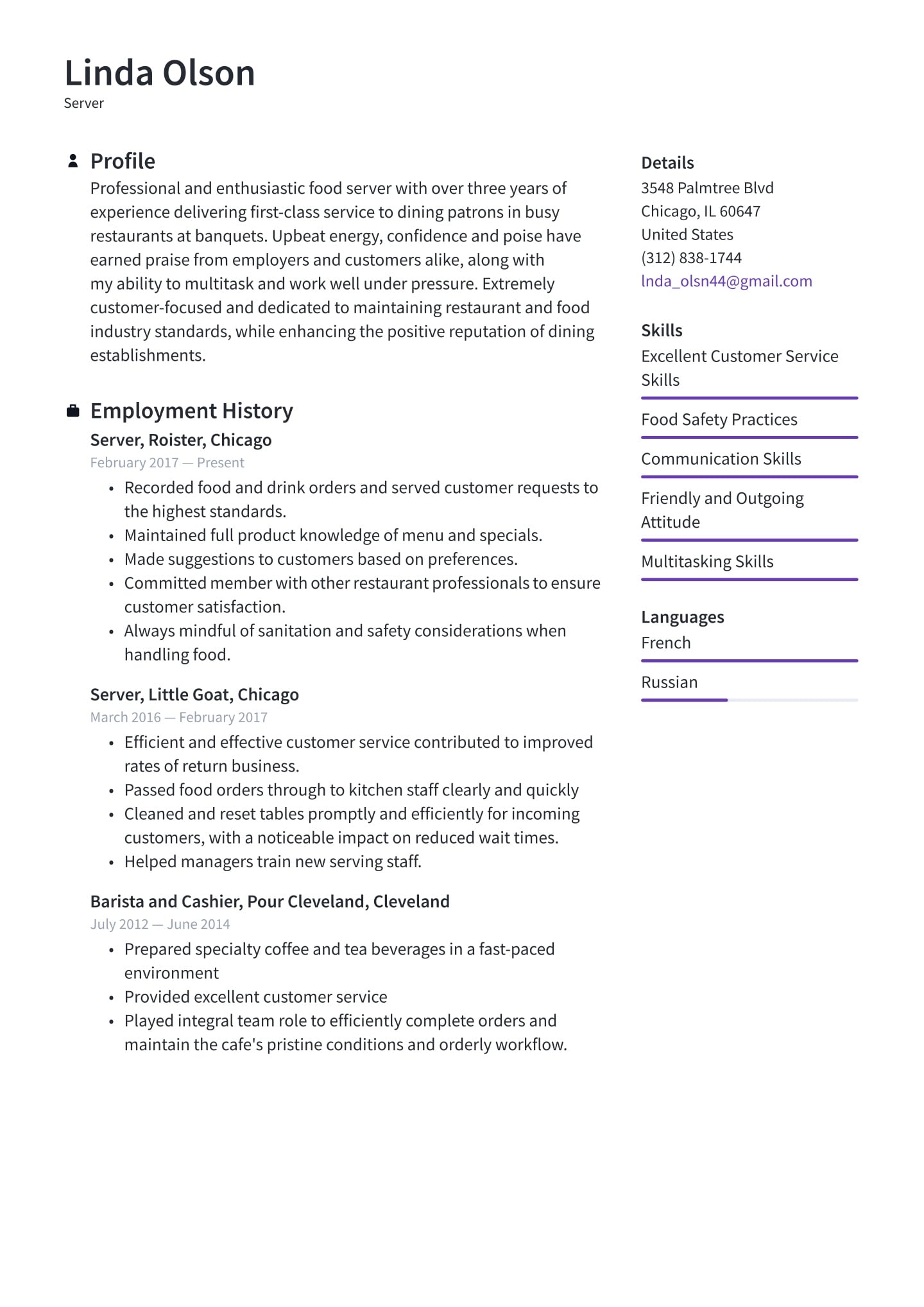
Highlight any tech skills you already possess, even if they seem basic. Are you proficient in Microsoft Office? Do you have experience with point-of-sale (POS) systems? These are all valuable skills. A clean, modern resume template is essential. Avoid overly ornate or cluttered designs. Dump CV offers a range of templates specifically designed for career changers, with ATS compatibility to ensure your resume gets seen.
Compare these two approaches. Instead of writing 'Served tables,' write 'Resolved customer issues in a fast-paced environment to maintain satisfaction.' Instead of 'Managed cash register,' use 'Managed financial transactions accurately to maintain a balanced drawer.'
Keywords recruiters search for
Keywords are critical for getting your resume past Applicant Tracking Systems (ATS) and into the hands of a human recruiter. Analyze job descriptions for your target roles – SDR, Support, Project Coordinator, etc. – and identify frequently used terms. Pay attention to both hard and soft skills. For example, an SDR role might prioritize keywords like 'lead generation,' 'sales cycle,' 'CRM,' and 'communication.'
Categorize keywords by skill type: communication (e.g., 'active listening,' 'interpersonal skills,' 'written communication'), technical (e.g., 'Microsoft Office Suite,' 'data entry,' 'CRM software'), and problem-solving (e.g., 'critical thinking,' 'troubleshooting,' 'conflict resolution'). Strategically incorporate these keywords into your resume, but avoid keyword stuffing – use them naturally within your descriptions.
LinkedIn Job Search is a great resource for keyword research. You can search for job titles and analyze the skills listed in the job descriptions. Jobscan is a paid tool that analyzes your resume and provides feedback on keyword optimization. It’s a worthwhile investment if you’re serious about making a career change. Remember, the goal is to make your resume relevant to the jobs you’re applying for.
Don't rely solely on keywords, though. Recruiters are looking for more than just a list of skills. They want to see evidence of those skills in action. Use the STAR method (Situation, Task, Action, Result) to describe your accomplishments and demonstrate how you’ve used your skills to achieve positive outcomes.
Networking and building skills
A resume is just the first step. Networking is crucial for landing a tech job. Connect with people in your target industry on LinkedIn. Attend online or in-person industry events. Don’t be afraid to reach out to people and ask for informational interviews – a chance to learn about their experiences and get advice. Building relationships can open doors you never knew existed.
Consider online courses and certifications to bridge skill gaps. The Google IT Support Professional Certificate is a popular option for those new to tech. HubSpot Academy offers free courses on sales, marketing, and customer service. These certifications demonstrate your commitment to learning and can give you a competitive edge. Even small personal projects can show initiative – building a simple website or learning a new software program.
There are many free or low-cost resources available for skill building. Codecademy offers interactive coding courses. Coursera and edX provide access to university-level courses. YouTube is a treasure trove of tutorials and educational content. The key is to be proactive and demonstrate your willingness to learn. Don’t wait for opportunities to come to you; create them yourself.
Remember, a career change is a journey. It takes time, effort, and persistence. Don’t get discouraged by setbacks. Keep learning, keep networking, and keep applying. Your hospitality experience is valuable – you just need to present it in the right way.
What is your biggest challenge when switching from hospitality to tech?
Career transitions are never simple, and moving from hospitality to tech comes with its own unique set of hurdles. Whether you are a server, bartender, or hotel manager looking to break into the tech industry in 2026, we want to hear from you. Understanding the most common obstacles can help us create better resume guides and career resources on Dump CV to support your journey. Vote below and share what is holding you back the most!
No comments yet. Be the first to share your thoughts!