

Restaurant roles in 2026
The restaurant industry is changing. Growth is steady in fast-casual and delivery-focused spots, creating roles that didn't exist five years ago. You aren't just limited to carrying trays; you're managing digital workflows and customer data.
For many, a server position feels like a starting point, but it absolutely doesn’t have to be the finish line. A solid foundation in hospitality opens doors to roles like supervisor, shift lead, front-of-house manager, and even specialized positions in training or event planning. These aren’t leaps of faith; they’re logical progressions based on demonstrated skills. The key is presenting those skills effectively.
Technology is reshaping these career paths. Modern Point of Sale (POS) systems like Toast and Square aren’t just for taking orders; they’re data hubs for inventory management and customer insights. Online ordering platforms and third-party delivery services require staff who can manage digital workflows. Understanding these tools and demonstrating proficiency is becoming increasingly important, and something you should highlight on your resume.
Translating server skills for management
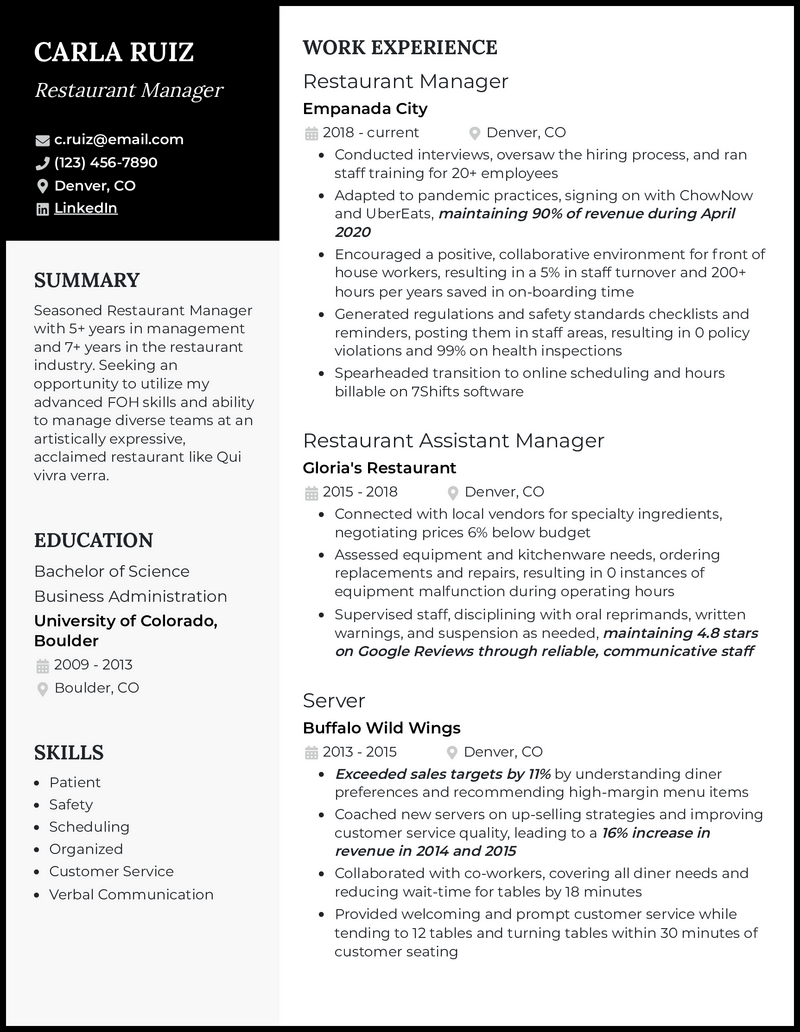
Most servers downplay what they actually do. If you can handle a twelve-table section during a Friday rush while a POS terminal is down, you're already a project manager. The trick is writing that down in a way a hiring manager recognizes as leadership.
Instead of a vague statement like 'provided excellent customer service,' try something more impactful: 'Resolved an average of 15 customer issues per shift, consistently receiving positive feedback and maintaining a 95% customer satisfaction rating.' See the difference? Numbers and specifics make your claims believable. Similarly, 'maintained a clean and organized work station' becomes 'Ensured adherence to strict sanitation standards, contributing to a consistently high health inspection score.'
Think about the challenges you’ve overcome. Did you handle a particularly difficult customer? Did you train a new colleague? Did you streamline a process that improved efficiency? These are all valuable experiences that demonstrate leadership potential. Don't be shy about showcasing them.
Verbs that actually work
Weak verbs weaken your resume. Instead of saying "assisted with training,’ use ‘mentored’ or ‘onboarded.’ Instead of ‘responsible for inventory,’ use ‘managed’ or ‘optimized." The right verb can dramatically improve the impact of your descriptions.
Here's a starter list, categorized for your convenience. Leadership: mentored, supervised, coordinated, delegated, led, guided, motivated. Communication: articulated, presented, negotiated, collaborated, liaised, conveyed. Problem-Solving: resolved, addressed, identified, analyzed, rectified, overcame.
Technical Skills: operated, maintained, implemented, utilized, programmed, configured. Remember to tailor your verb choices to the specific requirements of the job description. And don't just throw in buzzwords; make sure they accurately reflect your experience.
Using numbers to prove your value
This is arguably the most important piece of advice I can give you. Achievements are far more compelling than responsibilities. Instead of saying "improved table turnover,’ say ‘Increased table turnover by 10% during peak hours, resulting in a 5% increase in revenue."
Even seemingly small tasks can be quantified. "Managed cash handling for an average of $1000 in daily sales with zero discrepancies.’ ‘Reduced customer complaints by 15% through proactive service and attentive problem-solving.’ ‘Trained 5 new servers, resulting in improved team performance and reduced onboarding time."
Don’t be afraid to estimate if you don’t have exact figures, but be reasonable and transparent. If you consistently handled a high volume of customers, state that clearly. The goal is to demonstrate your impact and value to a potential employer. Numbers speak louder than words.
Choosing a layout
There are three main resume formats: chronological, functional, and combination. A chronological resume lists your work experience in reverse chronological order, which is good for showcasing a consistent career path. A functional resume focuses on your skills, which can be useful if you have gaps in your employment history. A combination resume blends both approaches.
For servers transitioning to supervisory roles, I recommend a combination format. It allows you to highlight your transferable skills – customer service, communication, problem-solving – while still showcasing your relevant work experience. This is especially important in the restaurant industry, where experience is highly valued.
Choose a template that prioritizes readability. If a recruiter can't find your last job title in five seconds, the design is too complex.
Beating the tracking systems
Many companies use Applicant Tracking Systems (ATS) to screen resumes before they even reach a human recruiter. These systems scan your resume for keywords and other criteria, and automatically filter out candidates who don't meet the requirements. Ignoring ATS optimization is like throwing your resume into a black hole.
Keyword research is crucial. Review job descriptions for the roles you’re targeting and identify the key terms hiring managers are searching for – "shift lead,’ ‘team management,’ ‘inventory control,’ ‘food safety." Incorporate those keywords naturally into your resume, but avoid keyword stuffing. The goal is to make your resume readable for both humans and machines.
Save your resume as a PDF to preserve formatting. Avoid using tables and images, as some ATS can’t parse them correctly. Keep the formatting simple and clean. A well-optimized resume will significantly increase your chances of getting an interview.
Resume Layout Decision Matrix: Choosing the Right Format for Restaurant Industry Advancement
| Experience Level | Career Change? | Focus |
|---|---|---|
| Chronological | Low | Experience Progression |
| Chronological | Medium | Highlighting Stability |
| Functional | High | Skill Emphasis |
| Functional | Low | Addressing Employment Gaps |
| Combination | Medium | Balancing Skills & History |
| Combination | High | Targeting Specific Roles |
| Chronological | High | Demonstrating Consistent Growth |
| Functional | Medium | Downplaying Limited Experience |
Illustrative comparison based on the article research brief. Verify current pricing, limits, and product details in the official docs before relying on it.
Real examples of successful transitions
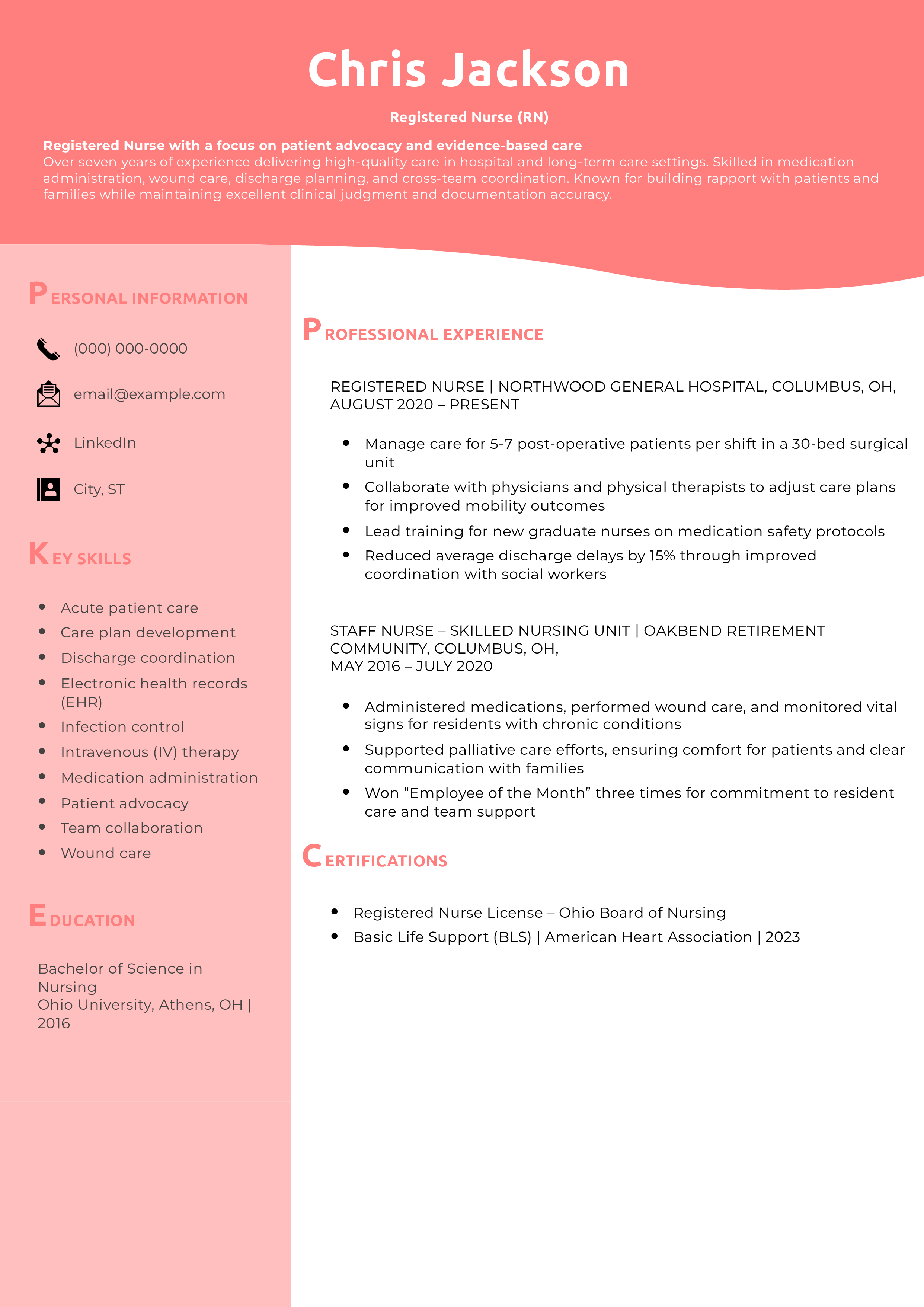
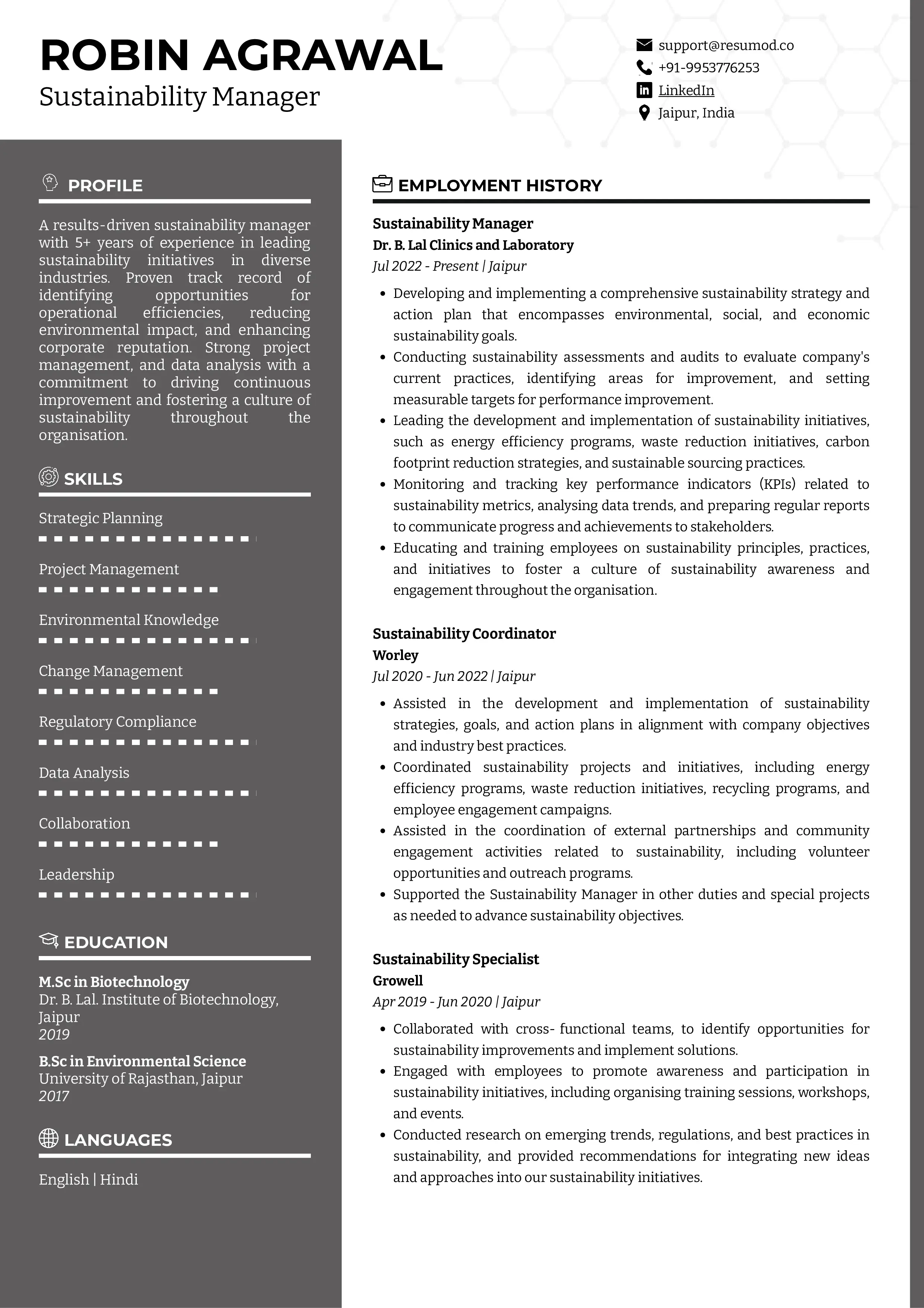
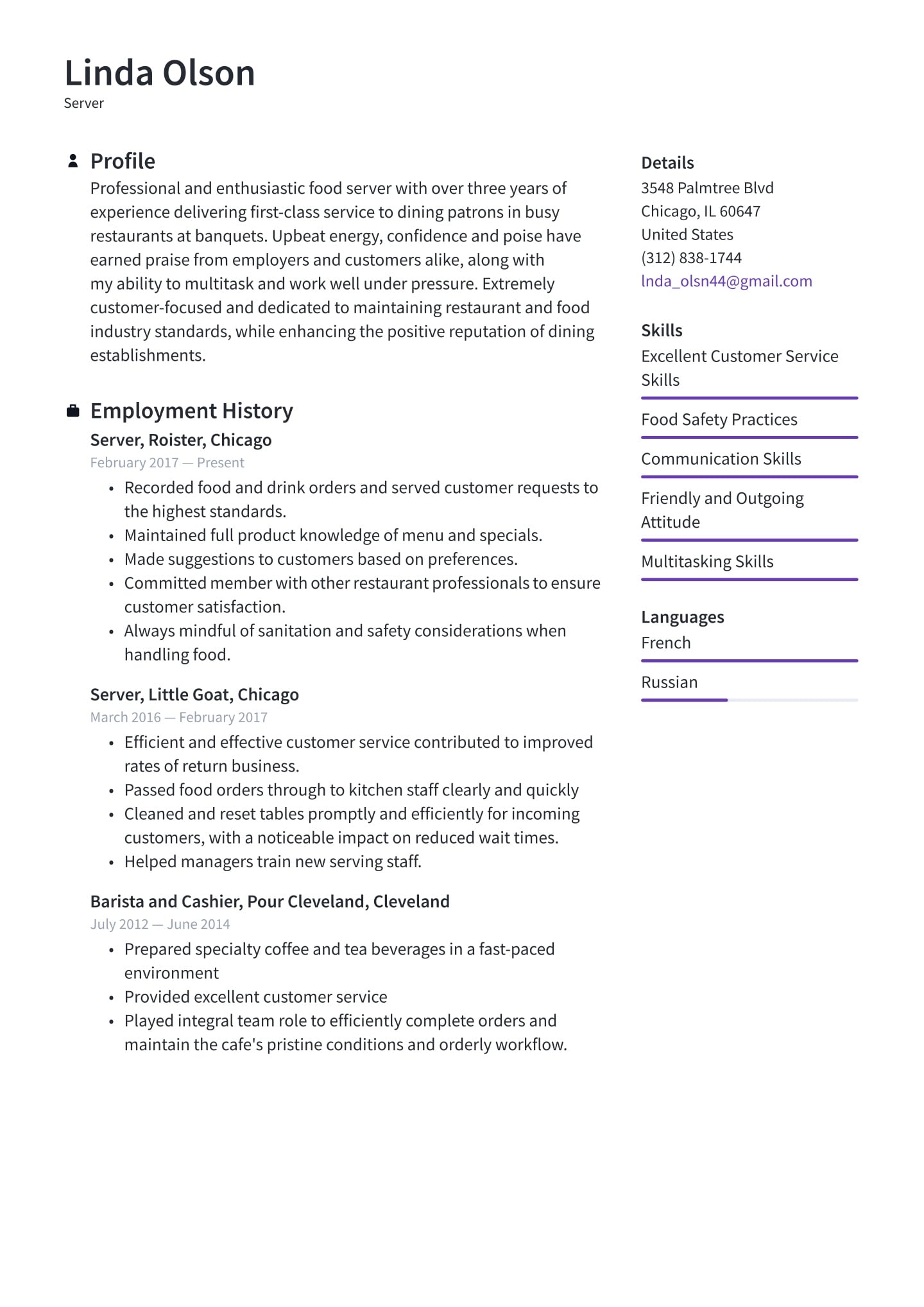
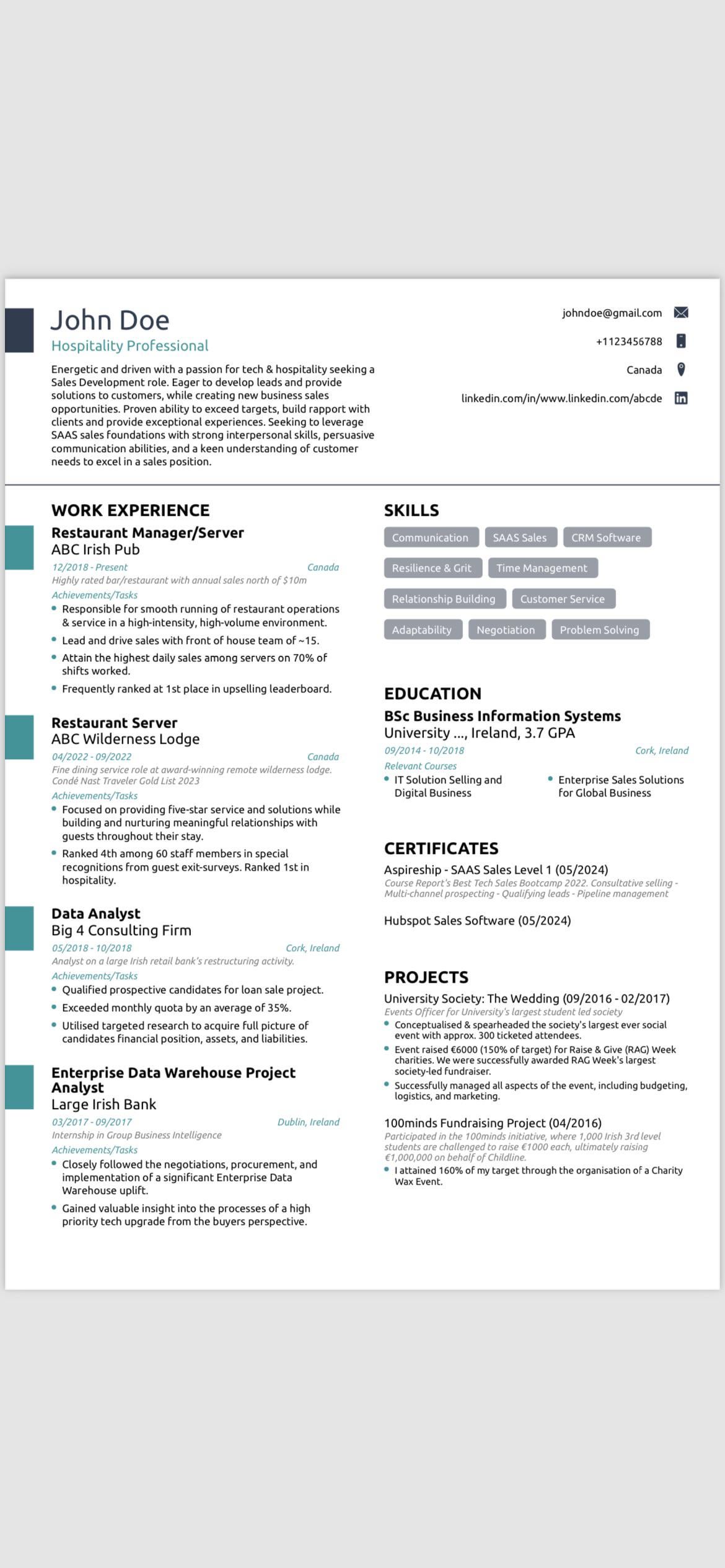
I've seen resumes where a server listed 'trained 5 new hires' and immediately got a callback for a lead position. It works because it proves you can handle responsibility beyond your own station. Use verbs like 'onboarded' or 'audited' to stand out.
Another example, highlighting a focus on customer service and problem-solving, details resolving customer complaints and maintaining a positive dining experience. This resume effectively uses keywords like 'customer satisfaction' and 'conflict resolution.' A key takeaway is the emphasis on soft skills, presented as demonstrable achievements.
Finally, a third example showcases experience with POS systems and inventory management. This resume highlights technical skills and demonstrates a proactive approach to improving efficiency. Notice how the candidate quantified their contributions: 'Reduced food waste by 8% through improved inventory tracking.' These examples demonstrate that a well-crafted resume can effectively communicate your value to potential employers.
No comments yet. Be the first to share your thoughts!