

Server Resumes: What Hiring Managers Want Now
The restaurant industry is still recovering and evolving, but hiring is happening. What’s changed in what restaurants are looking for in a server? It’s not enough to just be friendly anymore. While personality is important, 2026 sees restaurants prioritizing efficiency, adaptability, and a bit of salesmanship. Job postings on Indeed and LinkedIn consistently emphasize the ability to handle high-volume periods, work well under pressure, and upsell effectively.
I’ve been looking at postings from chains like Olive Garden and local restaurants in major cities. Beyond the standard 'team player' and 'excellent communication,' several recurring themes appear. Proficiency with POS systems like Toast and Aloha is almost universally requested. More interestingly, restaurants are explicitly asking for experience handling customer complaints gracefully, a sign of the increased stress customers (and staff) are under.
The rise of takeout and delivery has also impacted the server role. Many servers are now responsible for packaging orders accurately, managing online ordering platforms, and even assisting with curbside pickup. This requires a different skillset than traditional tableside service. Restaurants want servers who can seamlessly transition between these tasks. They need someone who can handle a complex situation with a cool head and a smile, whether it's a busy dining room or a frantic delivery rush.
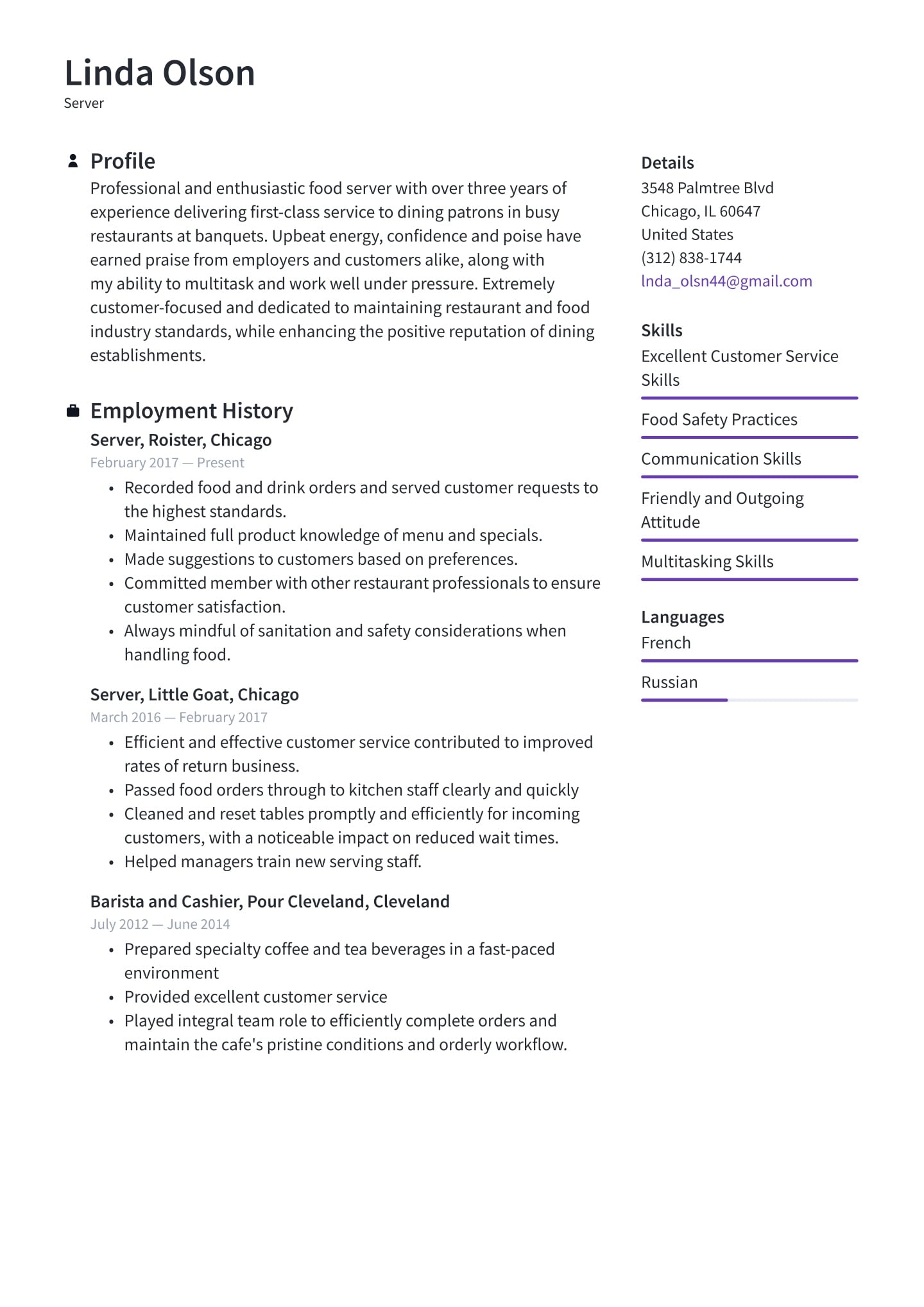
Essential Server Resume Sections (and What to Skip)
Let’s be direct: your server resume needs four core sections. First, your Contact Information – name, phone number, email, and optionally a link to your LinkedIn profile. Second, a concise Summary/Objective. Forget the lengthy, generic objective statements of the past. A strong summary should be 2-3 sentences highlighting your key skills and experience. Think of it as your elevator pitch.
Next is Work Experience. This is where you’ll detail your previous serving jobs, emphasizing achievements rather than just listing duties. Finally, the Skills section, which we’ll cover in detail shortly. Optional sections include certifications like food handler’s permits and responsible beverage service training – absolutely include these if you have them. Awards or recognition are also good to list.
I’m not a fan of including a "References’ section. It’s generally understood that you"ll provide references upon request. It's a waste of valuable space. Focus on making the rest of your resume compelling enough that they want to ask for references. Ditch the flashy fonts and unnecessary graphics. A clean, professional look is always best.
Skills That Get Noticed: Beyond 'Friendly'
Okay, let's get specific about skills. Restaurants aren’t just looking for someone "friendly’ – they want demonstrable abilities. We can break these down into three categories. Hard Skills include proficiency with POS systems (Toast, Aloha, Square are the big ones), table management software, and knowledge of wine, beer, and cocktails. Don"t just list these; specify your level of experience.
Soft Skills are equally important. Communication, problem-solving, multitasking, and conflict resolution are essential. But don’t just say you have them. Show them through your work experience examples. Finally, there are Restaurant-Specific Skills like upselling, menu knowledge, food safety procedures, and the ability to handle cash accurately. These skills are a direct reflection of your ability to contribute to the restaurant's bottom line.
When listing skills, use keywords from the job description. I’ve noticed a lot of postings specifically mention "attention to detail’ and ‘ability to work in a fast-paced environment." Tailor your skills section to match the requirements of each job you apply for. Don't lie, of course, but prioritize the skills that are most relevant.
- POS Systems: Toast, Aloha, Square
- Table Management: OpenTable, Resy
- Beverage Knowledge: Wine, Beer, Cocktails
- Restaurant Skills: Upselling, Menu Knowledge, Food Safety
Server Skill Categories
- Essential Hard Skills - Foundational abilities for any server role.
- Important Soft Skills - Interpersonal qualities crucial for guest satisfaction.
- Restaurant-Specific Skills - Expertise related to particular dining environments.
- Hard Skills Examples: Point of Sale (POS) systems (e.g., Toast, Square for Restaurants, Aloha), Order Taking, Cash Handling, Table Setting, Food Running.
- Soft Skills Examples: Communication, Teamwork, Problem-Solving, Active Listening, Patience, Time Management.
- Restaurant Skills Examples: Upselling/Cross-selling, Menu Knowledge, Wine/Beverage Service, Handling Customer Complaints, Section Management, Knowledge of Food Allergies.
- Resume Optimization Note: Quantify your skills whenever possible. Instead of 'Excellent communication skills,' try 'Communicated effectively with an average of 50+ guests per shift.'
- Important Reminder: Tailor this list to match the job description! Highlight the skills the employer specifically requests.
Work Experience: Show, Don’t Just Tell
This is where most server resumes fall flat. Listing duties like “Took orders and served food” is a missed opportunity. Instead, focus on achievements. Instead of simply stating your responsibilities, quantify your accomplishments whenever possible. For example, instead of 'Provided excellent customer service,' try 'Consistently provided excellent service to an average of 60 guests per shift, resulting in positive customer feedback and increased tips.'
Use numbers to demonstrate your impact. Did you consistently receive positive reviews? “Maintained a 95% positive customer satisfaction rating based on online reviews.” Did you increase sales? “Increased average table spend by 15% through effective upselling techniques.” Did you resolve customer complaints effectively? “Successfully resolved over 20 customer complaints per month, maintaining a calm and professional demeanor.”
Gaps in employment are a concern for many applicants. Be honest about them, but frame them positively. Did you take time off to travel or pursue education? Briefly explain the reason for the gap and highlight any skills you gained during that time. Even volunteer work can demonstrate valuable skills like teamwork and communication. Don’t try to hide gaps – transparency is key.
Resume Layouts: Modern Templates That Work
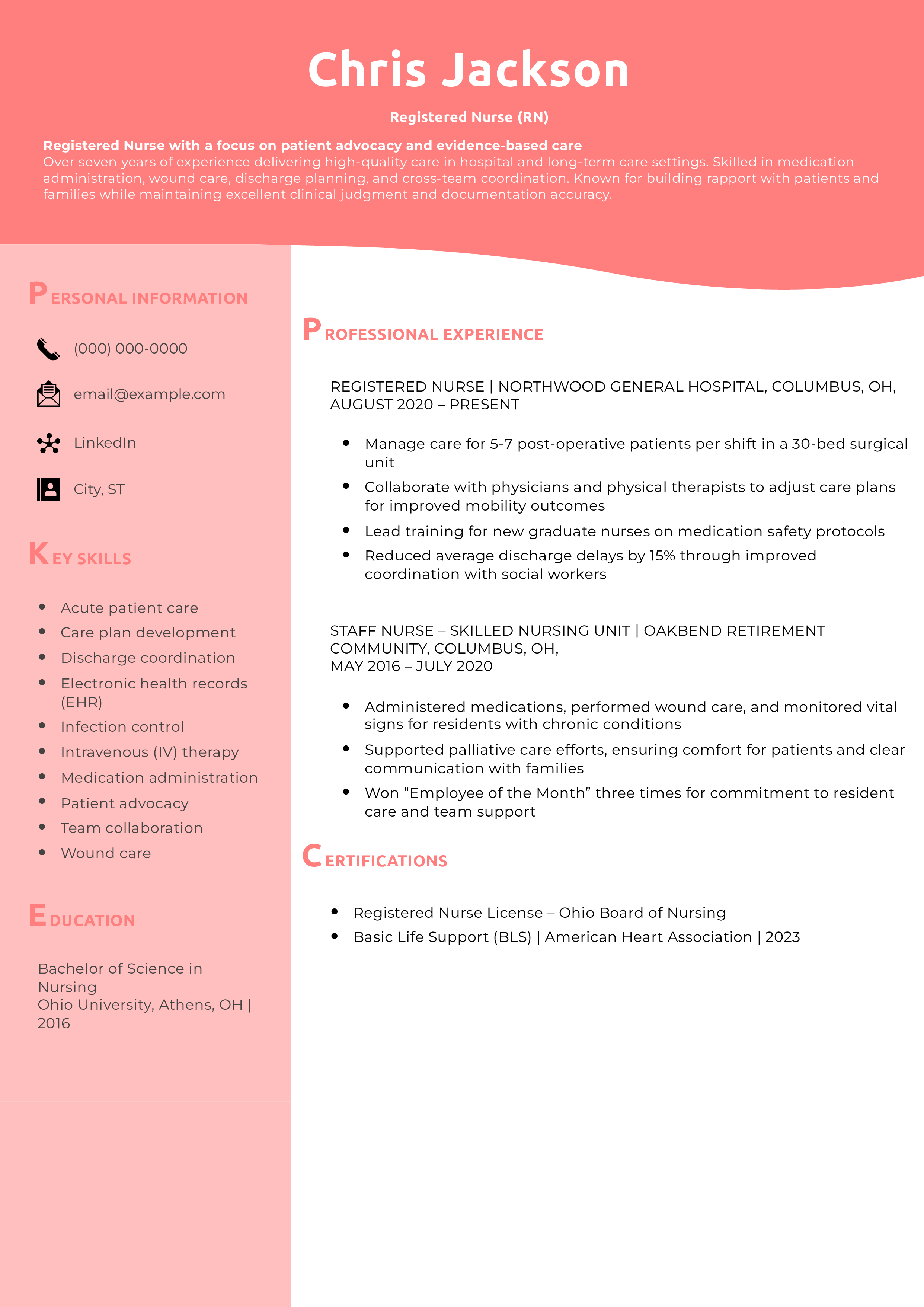
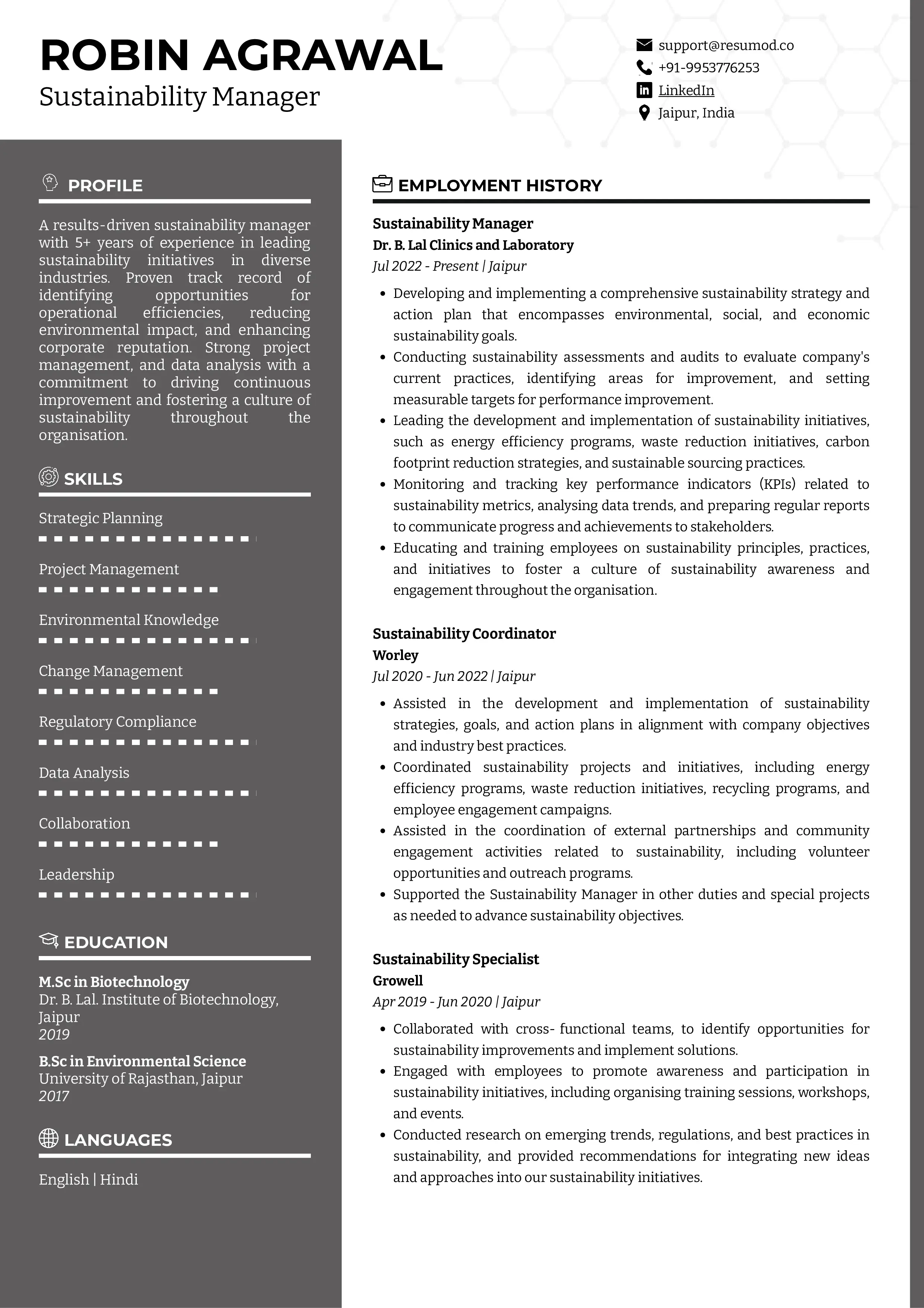
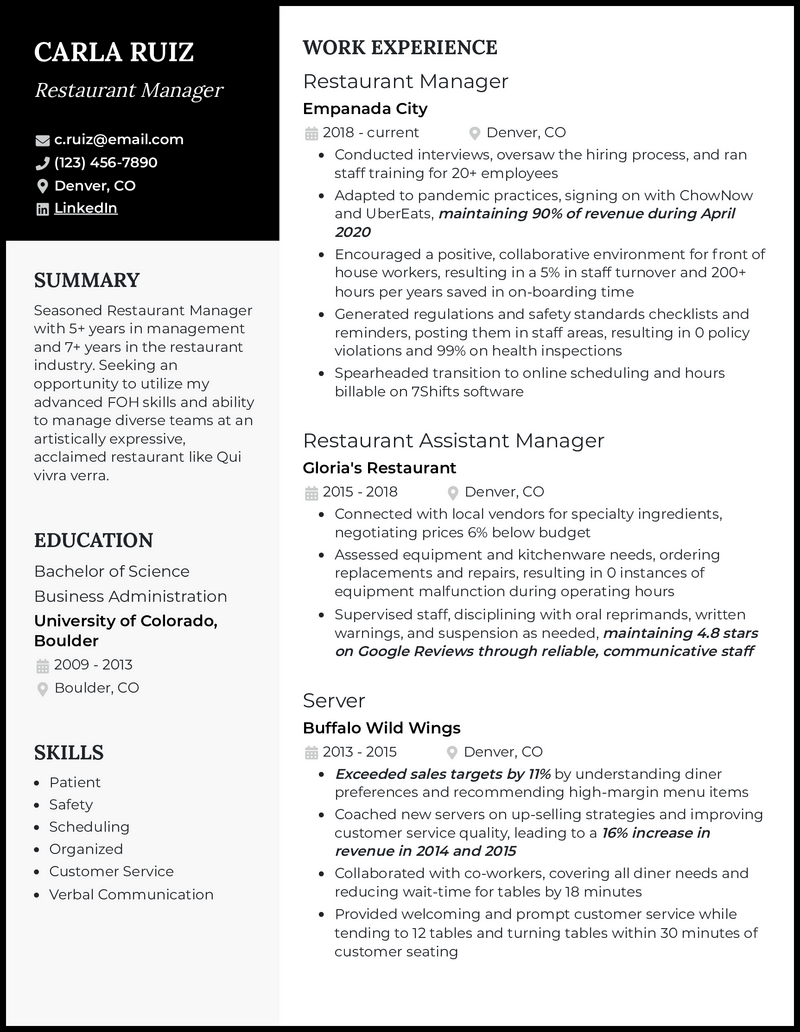
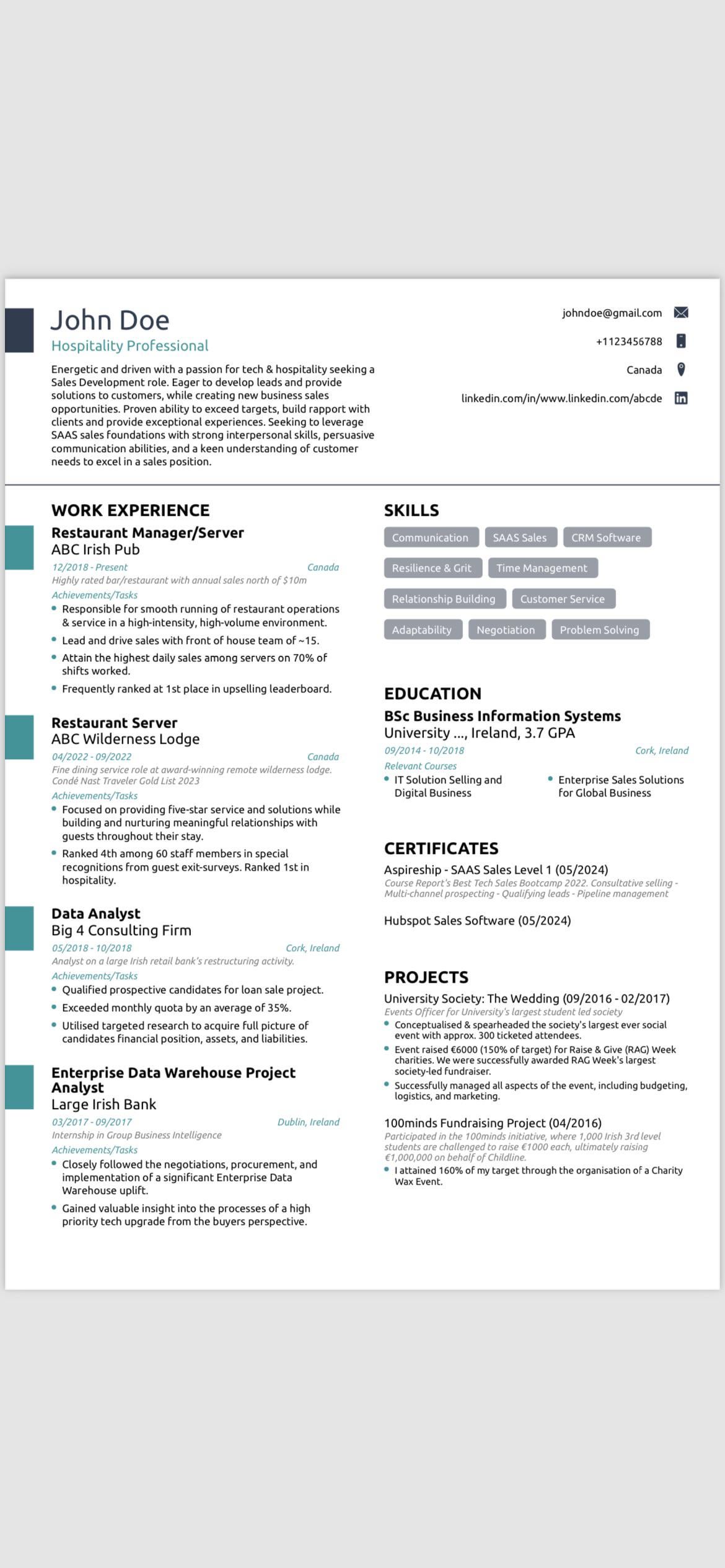
A visually appealing and well-organized resume is crucial. Dump CV offers several modern resume layouts specifically designed for the hospitality industry. These templates prioritize readability and a clean aesthetic. I particularly like the 'Metro' and 'Classic' templates – they strike a good balance between professionalism and visual interest.
What makes these templates effective? They use clear headings, easy-to-read fonts (like Arial or Calibri), and strategic use of white space. They also avoid overly complex formatting that can confuse applicant tracking systems. Chronological resumes (listing your work experience in reverse chronological order) are generally best for servers with a consistent work history.
If you’re changing careers or have significant gaps in your employment history, a functional resume (focusing on skills rather than work history) might be a better option, but these are less common and can sometimes raise red flags. Regardless of the layout you choose, ensure your resume is ATS-friendly. Avoid using headers and footers, images, and tables.
Optimizing for Applicant Tracking Systems (ATS)
Many restaurants, even smaller ones, use Applicant Tracking Systems (ATS) to screen resumes. These systems scan your resume for keywords and automatically filter out candidates who don’t meet the minimum requirements. Understanding how ATS works is essential to getting your resume seen by a human.
To optimize your resume for ATS, use relevant keywords from the job description. Avoid using images, tables, or complex formatting. These can confuse the system. Save your resume as a PDF – this preserves the formatting while still being readable by most ATS. Avoid using text boxes or unusual fonts.
There are online ATS scanners available, but I’m skeptical of their accuracy. The best approach is to focus on best practices: use clear language, relevant keywords, and a simple, clean layout. Test your resume by sending it to yourself and opening it in different programs to ensure it displays correctly.
Server Resume Examples: Standout Success Stories
Let’s look at a few examples of strong server resumes. I analyzed several resumes from Indeed and other sources, focusing on those that landed interviews at reputable restaurants. One standout resume I found highlighted the candidate’s ability to memorize a large menu and provide detailed descriptions of each dish. They also quantified their upselling success, stating they "increased appetizer sales by 20% through proactive recommendations."
Another strong resume emphasized the candidate’s ability to handle high-pressure situations. They described a time when they successfully managed a particularly busy shift, despite being short-staffed. They used action verbs like 'coordinated,' 'prioritized,' and 'resolved' to demonstrate their skills. They also included a section on relevant certifications, such as food handler’s and alcohol server permits.
A common mistake I noticed in weaker resumes was a lack of specific details. Simply stating "provided good customer service’ isn"t enough. You need to show, not tell. The most effective resumes demonstrate a clear understanding of the server role and a commitment to providing excellent service. Focus on your achievements and quantify your results whenever possible.
No comments yet. Be the first to share your thoughts!